On November 9, 1989 representatives from fifteen countries gathered together to discuss the politics of food. From their discussion the Slow Food International movement was formed and began to promote their manifesto that, “[i]n the name of productivity, Fast Life has changed our way of being and threatens our environment and our landscapes. So Slow Food is now the only truly progressive answer” (“Manifesto” par. 8). Since its inception the Slow Food movement has spread to 122 countries. This movement is not the only one of its kind. In recent years the focus on food has been a critical part of the ecological movement, introducing new concepts and even new language to describe the human relationship with food (locavore for example). These movements represent a sensible ordering of thought around a logical central idea. Food is a logical point around which to organize ones feelings and actions regarding their relationship to nature and resource use, because food is one of the few items that make obvious human reliance on and interconnection with the natural world.
The body of American literature contains multitudes of works focused on humanity’s relationship to the natural world. Many of these works, especially in the 19th and 20th centuries, rely upon a worldview which vilifies the urban and elevates the wild as a sacred place apart. This tension between urban and wild is a central element in Willa Cather’s 1925 novel The Professor’s House. Characters such as Tom Outland and Louis Marsellus seem emblematic of this dichotomy. Even their names provide support for this concept, Outland (out-land) as the mesa dwelling place apart, and Marsellus (mar-sell- us) as the eager capitalist who Cather portrays as corrupter of Outland’s legacy. While this division has been widely accepted in many circles for generations, the concepts of glorified “wild” and vilified “capitalist” are not in the end polar opposites, but rather reflections of a similar human desire to manipulate and organize the natural world while conveniently ignoring the relationship between humanity and nature that exists at all levels of landscape.
A useful place for interrogating this binary in The Professor’s House rests in Cather’s representation of gardens. According to garden enthusiast and philosopher Mara Miller, “[t]he task of the garden is to mediate those tensions or polarities which are important for a given culture” (25).
Thursday, December 4, 2008
Introduction So Far
Wednesday, December 3, 2008
Ending with a Boom/ Beginning with Slow Food
It was the last regular day of 121 for my classes today. We ended on a great note, especially in my 10 am class. They were so intensely interested and interactive, it was tremendous. We laughed and joked and learned. I was totally delighted by the experience and I hope some of them will end up in my 214 class.
Tuesday, December 2, 2008
Ecocriticism and the Locavore
Today I started working on the introductory paragraphs of my Cather seminar paper. In the paper I intend to look at how productive garden's in The Professor's House occupy a place between the idealized wild and vilified city. For me the garden is a place that destabilizes the civilization/nature binary.
Tuesday, November 11, 2008
In Light of This
Some of my conferences are frankly depressing. I know that I've done my best as far as instructing these students but many of them are quite transparently trying to pull the wool over my eyes. Many have submitted frankly useless drafts which seem to have been put together in one night. There are few if any quotes, no citation and little organization. It is overwhelming because I am not sure what more I could do.
In light of this let's forget about 121 for a moment....
Here's a little floundering bit of semi-recent poetry
Yaquina Head
Sooth on sooth the sea
tosses and wears away the meanings
in an arching skyward cauldron
combusting ginkgo
A delta leaf vein tremulous
stilled in Holocene weed fields
Rosebay pointing up and up
spike on spike between clusters
Salal all finger-linked haunched
and sea air rounded in great hills
Sunday, November 2, 2008
It's Electric!
So recent research into our energy use has yielded fantastic results. As most readers know, we are serious about reducing our energy use. We moved to a small place, we replaced all of our bulbs with CFLs and we have been minimizing electricity use in every way practical.
Thursday, October 23, 2008
Thesis Thursday Strikes Again

Meeting with Betj today to discuss the thesis. I've been entertaining thoughts of adding Cather to the mix, but perhaps I won't. I don't know. I am feeling some confusion about the whole thing. I've started looking at Dana Phillips' Truth of Ecology again, and I am really enjoying it. So far the book sticks it to Buell and most ecocritics, accusing them of being more interested in their own personal revelation than in either ecology or literature. It is hard for me to hear this in some ways because I'd been willing to call myself an "ecocritic".... however I don't share these views or methods. I think the "pastoral" in literature and life has been a mess. People deluding themselves into deepening the illusory divide between humanity and nature... I see no such divide.
Tuesday, October 7, 2008
Nature, Identity and Force: Cather's Alexander's Bridge
Friday, September 19, 2008
Arrr!!!
Greetings on Talk Like a Pirate Day! Although I spent most of this day gardening in true landlubber fashion, I do live in the home of this blessed day, and I tip my ratty tri-corner hat to all of the pirates out there fighting global warming. Because as we know more pirates=less global warming....
Sunday, September 14, 2008
Sustaining Community
Recently, while looking for a plant identification book for completing these vegetation surveys, I stumbled upon a book called Food Not Lawns. The subtitle of this book is, How to Turn Your Yard into a Garden and your Neighborhood into a Community. This got me thinking.
Wednesday, September 10, 2008
Free Fruits
We went to EE Wilson for the second day of vegetation surveying. Things went smoothly. I saw a lovely dry marsh and plenty of fruit trees growing wild. I ate some Asian pears and apple or two. Bird and I filled her pockets with plums and a big bowl of blackberries. All delightfully free.
a little more fruitiness... is this a Georgia Peach
Tuesday, September 9, 2008
Timid Men Prefer the Calm of Despotism to the Tempestuous Sea of Liberty
Although I had been planning to avoid politics today I was the recipient of a "banned book list" that Palin supposedly tried to push for while mayor. Book banning is another one of those issues that gets me up in arms so I had to look into it. Although fact checkers have found that the supposed "books banned by Palin" list is questionable, the fact checkers (even the rather right leaning ones) concede that Palin did ask about how to get books banned from the library in Wasilla. The fact checkers also concede that Palin fired (although under pressure from local citizens she later rehired) the librarian whom she originally asked about book banning. Why did she fire the woman? Because she felt the librarian was not "loyal" enough.
Sunday, September 7, 2008
A Day in the Park
Today we went to Avery Park for a walk around the loop trail and down to the edge of Mary's River. Freyja and Moose had a splendid time swimming around. Especially Freyja who thinks she is part river otter.

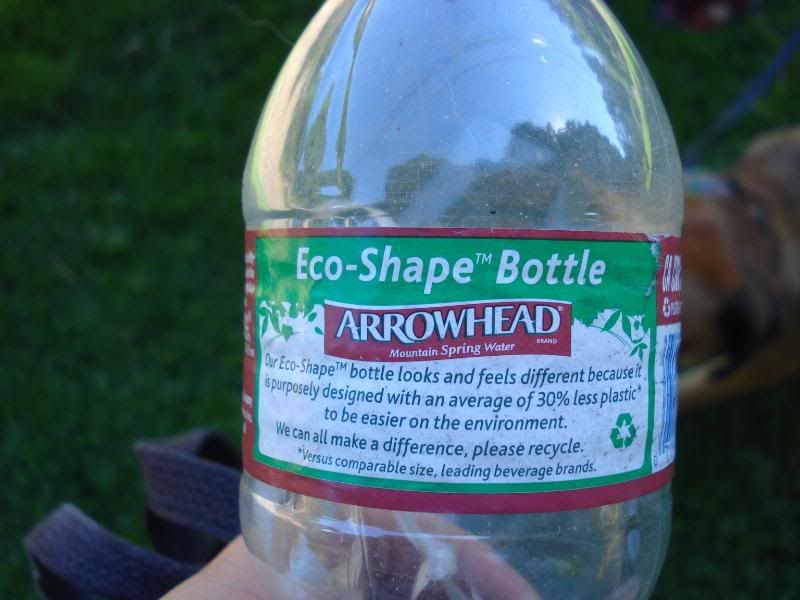
Americans shell out more than $20,000 "every minute of every day" or up to 60 cents for a glass of bottled water
1978 Consumption = 415 Million Gallons**
2006 Consumption = 8.2 Billion Gallons***
For comparison, Worldwide Consumption =
41 Billion Gallons***
It takes 1,851 gallons of water to refine one barrel of crude oil.**
Twenty-four gallons of water are needed to make one pound of plastic. **
1.5 to 2.7 million tons of plastic used per year to make bottles for bottled water.***
That’s 24gal/pd X 2000 pd/ton x 1.5 million tons = 72 billion gallons of water or 24 times the quantity of water used by the City of Corvallis every year to make bottles that are empty.
**Emily Gersema, Associated Press (2003)
***FAO and Earth Policy Institute (2006)
Thursday, September 4, 2008
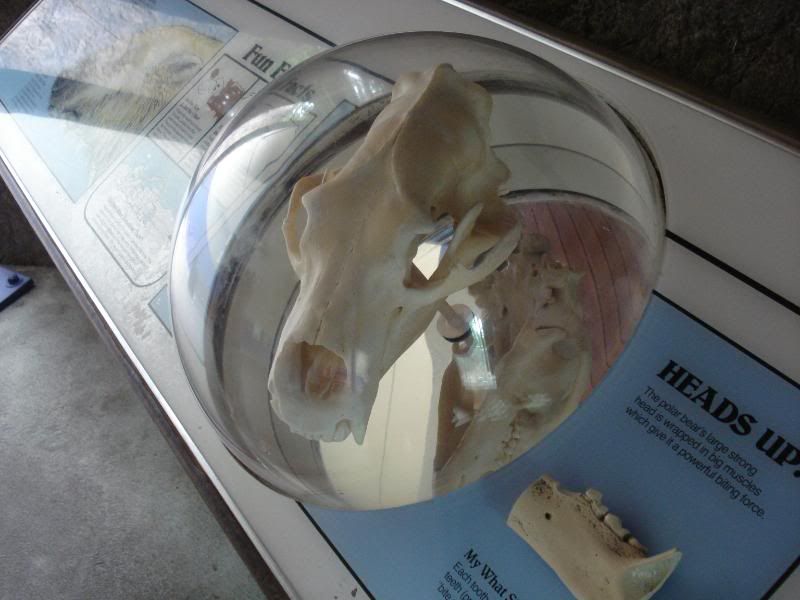
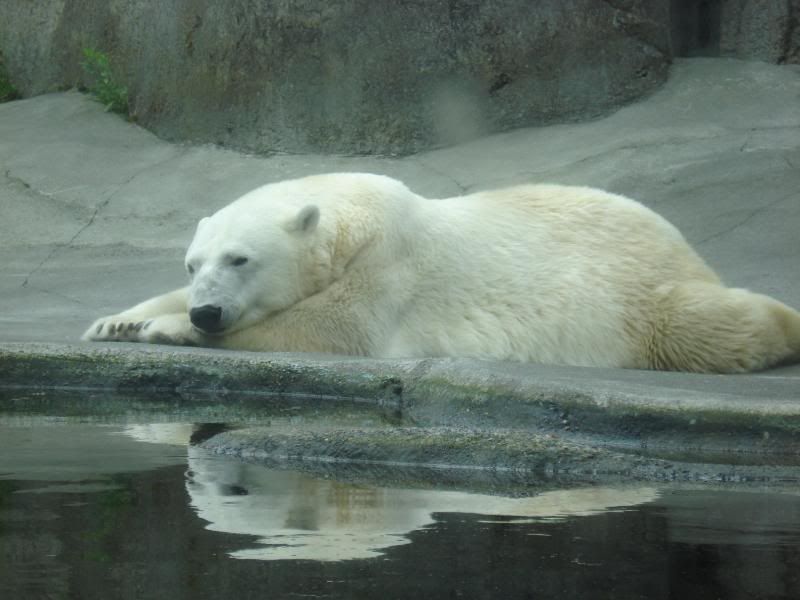
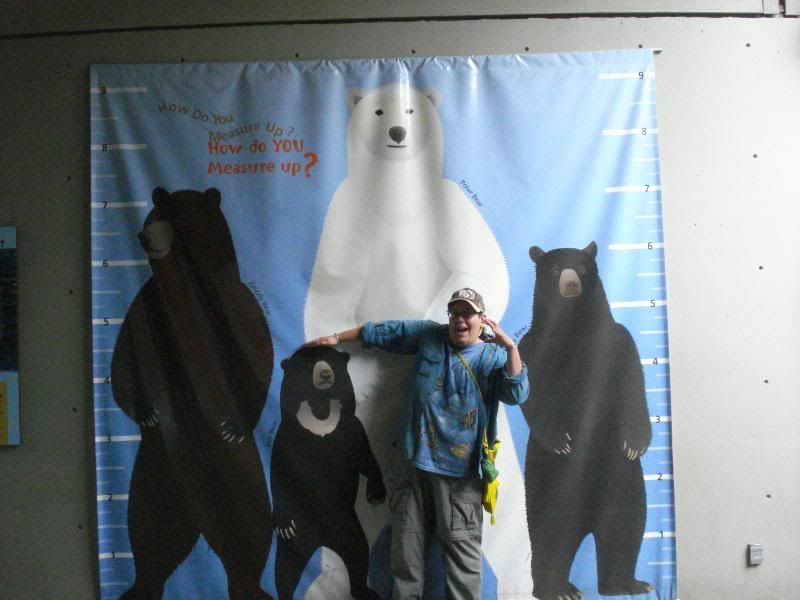
Ode To the Polar Bear
Since Gov. Palin thinks Polar Bears don't deserve protection I would like to take a moment to revel in the glories of the Polar Bear.
 These excellent creatures and their kind deserve our respect.
Sunday, August 31, 2008
Sustainability Sunday: Here Comes the Rain Again
For those who may now know it, Rain is the name of the game in many parts of the Pacific Northwest. Newport Oregon for example receives an average annual rainfall of 68 inches. Here in the Willamette Valley however we receive an average of 42 inches per year. This is not drastically different from the annual precipitation back in Blackstone Ma (48 inches). The main difference here is that our average winter temperature in Corvallis is near 40 F compared to Blackstone's 22ish degrees.
GMO Labeling: Threat Or Opportunity?
Peter W.B. Phillips and Grant Isaac
University of Saskatchewan, Canada
AgBioForum
Saturday, August 30, 2008
A Water What?
In the course of an instructional video I learned the depressing fact that 60% of adults polled in a survey conducted by the USFS did not know what a watershed is. 10% of those who didn't know thought that watershed is a synonym for a waterworks. Ironically 65% of people boil or filter their tap water. This means that more people are concerned about the health of their water than know where their water comes from. In a way this is a good thing because it means that these people might want to know what they can do to protect their water and themselves.
Friday, August 29, 2008
Ecocritic Meets the VP Nominee
Although I have been frankly anti-political since the Bush fiasco began, this upcoming presidential election is starting to get my attention. Initially, when it started to look like Obama and McCain might be the front runners, I felt both pleased and apathetic. I've always thought of McCain as a somewhat moderate Republican. This simply means that his name does not inspire me to do anything reactive...like scream. In that light he seemed like an acceptable possibility if the more desirable outcome of a Democratic (or more Ideally Green president) could not be achieved. I hadn't looked much into his policies because I already knew that he is anti-Gay marriage and thus I am anti-McCain.
Tuesday, August 19, 2008
Zooliteracy
Sunday, August 17, 2008
Sunday with Soil, Sustainability, and Cinema
We went to the garden center today and picked up some more seeds and soil. There was a lot to be done in the garden this weekend. First order of business involved stabbing a number of holes into the bottom of a forlorn and lidless rubbermaid tub thus transforming it into a cuke-topia! There are two fair sized cucumber plants comfortably situated in there now. I also re potted another bean plant, harvested a crop of baby carrots, re-tied the tomatoes and trimmed the fuscias, tomatoes, and strawberries (which have amazingly started flowering again). By the end of the day there will be some newly planted peas and lettuce.
Friday, August 15, 2008
Woolen Mills Finale & Round-up Tease
Despite the bleak outlook, textile production at Pendleton was not over. In February 16, 1909, ownership of the Pendleton Woolen Mills changed hands. New owners, from a prominent family with a history of successful textile businesses, Clarence and Roy Bishop “eagerly accepted the challenge of the management of the new company” (Lomax 274) The Bishops felt that the mill needed substantial physical and mechanical improvements before the business could resume. Working alongside a construction crew, the Bishops oversaw the building of a new three-story cement facility on land adjacent to the Union Pacific Railroad Company’s tracks. By September 1, 1909 construction was complete (274). The Bishops intended to continue the Pendleton production of Indian blankets and robes. The brothers employed Joe Rounsley, of the Philadelphia Textile school, to develop designs for the company’s Indian blankets. Rounsley’s product was “pure art, conceived by…living with the Indians” (276). In 1912 the Bishops procured the recently foreclosed Wahougal Mill in Washougal Washington (277). This purchased marked the beginning of a series of expansion moves the Bishops would coordinate. The expansions were used as a way to diversify product lines. During WWI Washougal produced army blankets while the Pendleton mill continued to produce Indian products (277) After the war, Pendleton began to develop virgin wool products and market them under the Pendleton blue and gold brand (279). By the late 1940’s Pendleton Woolen Mills Inc. came to include facilities as far away as Nebraska (300). Today Pendleton Woolen Mills is still operated by the Bishop family, and consists of seven facilities and 75 stores. The mill located in Pendleton Oregon continues to be the site of all Pendleton Indian blanket production (“About Pendleton”). I'm hoping to find information regarding the ecological impact of the Indian blanket production that goes on at Pendleton. I am concerned that the intense colors of the blankets may mean that significant pollution from dyes is part of the process. So far I have found very little information. What I do know is that Pendleton has taken a public position advocating sustainability. Of course in this political and social climate this is a smart market move, but it is still significant. Image of Pendleton Round-Up Blanket Lomax, Alfred F. 1974. Later Woolen Mills in Oregon, First Edition, Binfords & Mort,Portland, 301.  My next research endeavour is the Pendleton Round-up. So far I have a lot of fantastic vintage pictures depicting the Round-up's history, stay tuned for the visual feast.
Wednesday, August 13, 2008
Pendleton Woolen Mills and Woody Guthrie
As promised here's part two of the Pendleton Woolen Mills Saga: In the late 1890’s the pro-business East Oregonian newspaper ran an editorial extolling the virtues of suits made from wool that was raised, spun, and woven in Umatilla county. Although this promotion likely helped business at the young Pendleton Woolen Mills, manager and stockholder Theron E. Fell’s plan was not to focus on the production of suiting materials but rather to focus attention on selling blankets and Indian robes to the nearby Umatilla reservation (261) The total Indian population of the United States at the dawn of Pendleton Woolen Mills was approximately 263,000 people. Populations in the Northwest were approximately 4000 in Oregon, 10,000 in Washington and 12,500 in California (261). Shortly after the opening of the scouring plant, then scouring plant manager Theron E. Fell had “talked hopefully of a woolen mill” (257). By mid-July 1898 Pendleton Woolen Mills was legally incorporated and plans for the mill were made public. However, raising money for the venture was slow. Lomax states that “Money-raising was always a difficult task…but especially at this time when the country was just emerging from the panic conditions of the early 1890’s” (258). Despite delays caused by the economic slump the Pendleton Woolen Mills began operation on September 7, 1896 (260). “The company took particular pains to weave the correct designs and color demanded by the Indians…Robes with colors acceptable to the Crows in the north were unacceptable to the Navajos in the southwest. To meet this diversified demand and to assure accuracy in manufacture, a factory representative visited the various reservations” (261). Such attention to detail paid off, and Pendleton blankets sold well on the reservations. One store in Yakima, Washington placed an order for 1000 blankets in March 1897 and estimated that an additional 1500 would be sold that year (262). Pendleton products also sold well off the reservation. Robes in school colors were popular at colleges and universities, steamer rugs sold well in the east. But Pendleton remained primarily focused on the production of Indian blankets and robes. They worked to capitalize on the idea of the “romantic western Indian” to sell these products off the reservation. Early advertisements explicitly announced the connection between the Pendleton Mills and the Umatilla reservation pointing out that Pendleton robes are to Indians what a “Paris hat is to a Chicago girl on Easter morning” (264). In 1902 further investments were made in advertising. A number of well-known Indians were photographed wearing Pendleton robes, and these images along with a variety of images depicting Pendleton’s being used indoors and out were reproduced. An eight page booklet showing suggested uses for Pendleton robes was also produced from these images (268) Despite initial success, the first woolen mill at Pendleton did not last long. Using a number of primary source documents including legal proceedings, newspaper articles, and property leases Lomax infers that the Pendleton Mill went idle around 1907 (271). His sources seem to indicate that both economic problems in the region and legal problems at the mill played a role in the company’s collapse. Photo:. Umatilla County: A Backward Glance. Compiled by theUmatilla Historical Society. Published by E. O. Master Printers, Pendleton. 1980. Lomax, Alfred L. Later Woolen Mills in Oregon. Portland:Binfod and Morts, 1974. As an aside to all this Pendleton talk, I had the privilege of watching a 1950 film called "Columbia" which was put out by the Boneville Power Administration. It was one giant ode to dam building as a force for colonization and weapons manufacture. It was totally disturbing and would have been funny had it been fiction. The entire musical score was Woody Guthrie...