CLICK HERE FOR THOUSANDS OF FREE BLOGGER TEMPLATES »
Showing posts with label Sustainability. Show all posts

Thursday, December 4, 2008

Introduction So Far


On November 9, 1989 representatives from fifteen countries gathered together to discuss the politics of food. From their discussion the Slow Food International movement was formed and began to promote their manifesto that, “[i]n the name of productivity, Fast Life has changed our way of being and threatens our environment and our landscapes. So Slow Food is now the only truly progressive answer” (“Manifesto” par. 8). Since its inception the Slow Food movement has spread to 122 countries. This movement is not the only one of its kind. In recent years the focus on food has been a critical part of the ecological movement, introducing new concepts and even new language to describe the human relationship with food (locavore for example). These movements represent a sensible ordering of thought around a logical central idea. Food is a logical point around which to organize ones feelings and actions regarding their relationship to nature and resource use, because food is one of the few items that make obvious human reliance on and interconnection with the natural world.

The body of American literature contains multitudes of works focused on humanity’s relationship to the natural world. Many of these works, especially in the 19th and 20th centuries, rely upon a worldview which vilifies the urban and elevates the wild as a sacred place apart. This tension between urban and wild is a central element in Willa Cather’s 1925 novel The Professor’s House. Characters such as Tom Outland and Louis Marsellus seem emblematic of this dichotomy. Even their names provide support for this concept, Outland (out-land) as the mesa dwelling place apart, and Marsellus (mar-sell- us) as the eager capitalist who Cather portrays as corrupter of Outland’s legacy. While this division has been widely accepted in many circles for generations, the concepts of glorified “wild” and vilified “capitalist” are not in the end polar opposites, but rather reflections of a similar human desire to manipulate and organize the natural world while conveniently ignoring the relationship between humanity and nature that exists at all levels of landscape.

A useful place for interrogating this binary in The Professor’s House rests in Cather’s representation of gardens. According to garden enthusiast and philosopher Mara Miller, “[t]he task of the garden is to mediate those tensions or polarities which are important for a given culture” (25).

Sunday, November 9, 2008

O Tomorrow...

Tomorrow I have a test in Espanol, and my conferences start for paper two. It is rough. I don't really understand my Spanish that well with regards to verb conjugation, and I don't know why, but my students seem awfully confused lately, as though midterms sucked out their brains. My plan is to have them read their essays out loud to me while I take notes or ask questions about what I hear. We'll see how it goes.

In the joys of Sunday, my garden is doing well. We ate fresh strawberries this morning, and there are beans ripening. One sunflower has blossomed and many more are on their way. The peas have blossoms also. Oak leaves are crowding the lettuces, and it is a daily battle fending them off. Soon I'll be planting chard and kale. The herbs look great and the pansies too, some gladiolus soon to bloom. Sweet Oregon!

Sunday, November 2, 2008

It's Electric!

So recent research into our energy use has yielded fantastic results. As most readers know, we are serious about reducing our energy use. We moved to a small place, we replaced all of our bulbs with CFLs and we have been minimizing electricity use in every way practical.


The other day we went to Energy Star to test our usage. Our total source energy consumption is 51,111 KBTUs which is well below that of 99% of US homes. That is still a lot of energy, we cook and heat with electric. We watch TV in the evenings and use our computers quite a bit, but still we're doing pretty well.  

CFL's and unplugging everything when not in use are probably the main reasons for our reduction.

Sunday, October 5, 2008

Sustainability Sunday: Garden Quick Glimpse

I spent a chunk of the day winterizing the garden. I got some cull wood to build a little drainage shelf for some of the bigger plants. I dismantled the tomato plant and put in tulips, crocus, radishes, and broccoli. Things are looking good out there. Now I just need to build a little plastic lean-to to keep the heavy rains off. I'm thinking bamboo and old shower curtains.


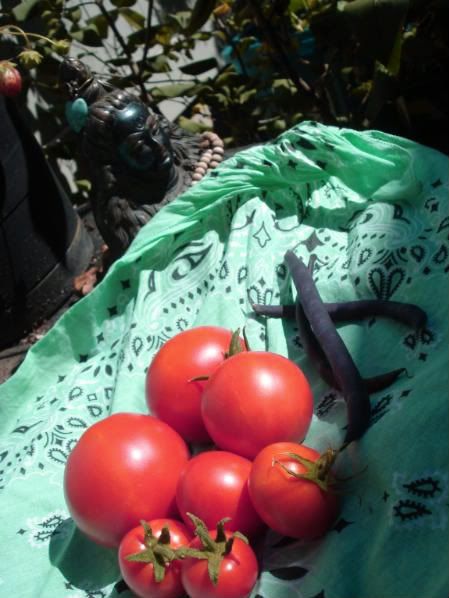
The mid to late summer plantings are doing well. We've had a cuke and there are plenty more on the vine getting bigger and tastier everyday. The purple beans have been offering a steady supply. The leeks are still teeny but doing well. The strawberries are booming, and the fuschias are blooming.

Sunday, September 28, 2008

Sustainability and the TA

In an attempt to bring sustainability into my classroom I've turned all of the homework assignments into online assignments using our online classroom component known as "Blackboard". 


Although computers use a great deal of electricity, it is a simple fact that 99% of my students turn in computer produced homework assignments. Since they are on the computer anyway, I figure making the assignments paper-free will cut down on resource use, and reduce the clutter on my desk. I'm all in favor of this. 

I'm also experimenting with some online peer review. While this may not be a move toward sustainability, I want to see how the online portion of my class might be used to facilitate discussions that might not happen face-to-face. I have no idea how this will work, but at the very least it will be a learning experience for me. I think online teaching is a great thing. It is a way to reach students who otherwise might never attend the university. It is also a way to enhance the learning experience of students in traditional classes. Ideally I'd like to teach online courses in the future. Later this fall I'm planning to take a course offered through Chemeketa Community College called Hybrid Instruction. 

Tomorrow it all begins again. The teaching, the reading, the panicked writing, the marathon conferencing, the endless research.

Sunday, September 21, 2008

Sustainability Stumbling

So this past weekend I decided it was time for me to get some new clothes for school. Clothes shopping is a huge issue for me for a number of reasons, not the least of which is my dismay over how fashion is used to "shape identity" in the consumer culture. If it were up to me I would own all second hand or hand made clothes, but my well-fed girth prevents the first and my lack of skill prevents the second. This being said I was prepared to spend some money on clothing that was either locally made or union made. 


I purchased a t-shirt at the Eugene Saturday Market from a guy who does batiking. The shirt is great and although it is not organic I felt pretty much ok because I was supporting a local artist. I still needed pants so I decided to find some Carhartts, since for as long as I can remember Carhartts are union made in the USA. 

Upon arriving back home I was dismayed to see that the pants I bought were Hecho en Mexico.

Boo...even Carhartts!!! Is there nothing sacred? I feel a bit bad about buying this gear, but mostly I am irked by the corporate decisions that I've just learned about (too late).

I guess I need to hunt up some sewing patterns...and some time.

New sustainability goal...one tub per week of recycling. Reducing packaging even more...yay.

New garden scavenging mission....free 5 gallon buckets and old clear plastic shower curtains

Monday, September 15, 2008

Fruit of the Harvest: part 1


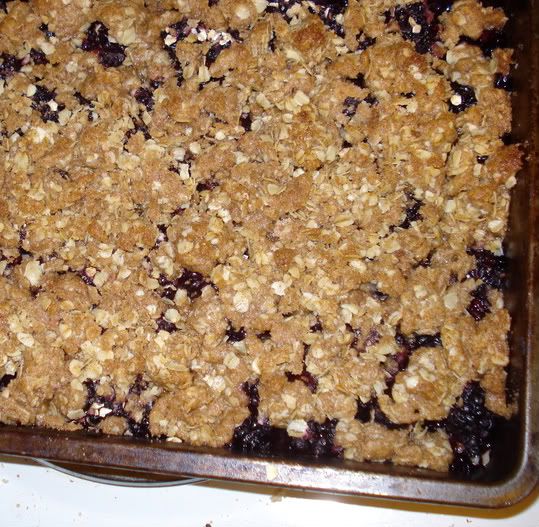
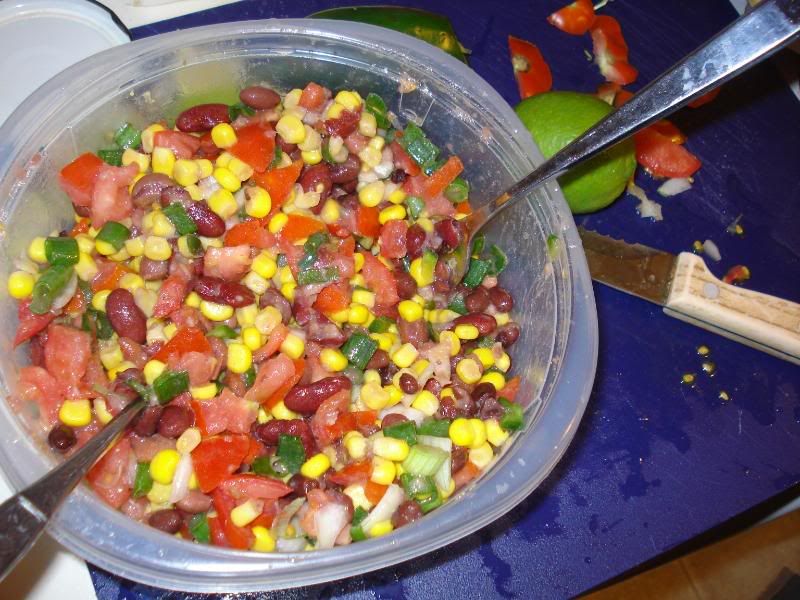
The past few days have been full of harvesting, prepping, and cooking. We've gathered blackberries, plums, pears and apples. We've also had a steady flow of tomatoes from the garden, and some beans have been collected as well. Add to this a great buy on Italian prune plums at the grower's market and that has made for busy times. It's also made for delicious times well worth sharing (click the links for photos of the delight).


4 c Fresh Blackberries
1-3 Tbs of Organic Sugar (some say 1/2 cup, but that is way too much) 
2 & 1/8 cups Organic Whole Wheat Flour
1/2 c Organic Brown Sugar
1/4- 1/2 cup Margarine or Butter
1/2 c Oats
2 Tbs Lemon Juice
Cinnamon
Coat the berries with lemon juice, sugar, and 1/8 cup of flour. Pour these into the bottom of a pan 9x13 should do it.
Mix Margarine, the rest of the flour, brown sugar, cinnamon and oats until crumbly. Spread this mix over the berries. 375 for 30 minutes.

3 green onions diced
1-2 Tbs diced jalapeno
1/2 onion diced
3-4 ripe tomatoes diced
1 can corn
1 can beans rinsed (black or mixed beans)
cilantro
1 lime worth of juice
2 Tbs olive oil
pinch of salt
Mix all the ingredients together in a large bowl and enjoy. Refrigerate the leftovers.

Sunday, September 14, 2008

Sustaining Community

Recently, while looking for a plant identification book for completing these vegetation surveys, I stumbled upon a book called Food Not Lawns. The subtitle of this book is,  How to Turn Your Yard into a Garden and your Neighborhood into a Community. This got me thinking.


Being raised in frosty old New England my concept of community is somewhat jaded. At this moment in my life I find that this word strikes the same cord in me as "self actualized", "inner-child", and whole host of other jargony catch phases that make me feel a little queasy. I don't know that I believe community is possible without radical change, change that far exceeds food choices and even ecological choices. 

Maybe I am wrong about this. Unlike inner-children, I want to believe that community is possible. I think Corvallis, while not a "community" in this new-agey sense, does have a unique culture evolving within its borders. The agriculture/food centered culture that exists within this town is unlike any I've ever known, and it seems to be a site of genuine creativity. This gives me hope.

Another thing I've been mulling over lately is elitism. I think that ultimately community fosters elitism and maybe I am ok with that. To be honest, I think my way of doing things is good (though not the only good way), I think it could be improved upon, but I decidedly feel that there are other ways which are not good. I don't mean not good for me. I mean immoral, wrong, not good. Does this make me an elitist? Perhaps, I'm still sorting this out. Opinions are welcome. At any rate I think a group of people who share enough resources and values to be a community will by virtue of those shared resources, values, and collective identity be expressing their sense of a superior way of life that they have found or created.

I don't know. What I do know is that the sustainability journey here at Casa Colibri is going reasonably well. We're deciding to unplug the tv altogether one day per week (it should totally be more, but I have come to love some mindless tv). We've also been put up large quantities of plums, and have harvested many more tomatoes. We've only filled our gas tank once this month (12 gallons), and we're down to 1-2 gallons of trash per week (not compacted).  

The beat goes on.

Thursday, September 11, 2008

"I will lose my mind if I don't get them..."

In the course of preparing my teaching materials I've been reading and thinking about John Taylor Gatto's "Against School". I've especially been mulling over his assessment of the material culture and its relationship to maturity. Gatto writes,  "Maturity has by now been banished from nearly every aspect of our lives. Easy divorce laws have removed the need to work at relationships; easy credit has removed the need for fiscal self-control; easy entertainment has removed the need to learn to entertain oneself; easy answers have removed the need to ask questions. We have become a nation of children, happy to surrender our judgments and our wills to political exhortations and commercial blandishments that would insult actual adults. We buy televisions, and then we buy the things we see on the television. We buy computers, and then we buy the things we see on the computer. We buy $150 sneakers whether we need them or not, and when they fall apart too soon we buy another pair. We drive SUVs and believe the lie that they constitute a kind of life insurance, even when we're upside-down in them. And, worst of all, we don't bat an eye when Ari Fleischer tells us to "be careful what you say," even if we remember having been told somewhere back in school that America is the land of the free. We simply buy that one too. Our schooling, as intended, has seen to it."


This passage is thought provoking on its own, but in combination with a recent Burlington Coat Factory ad they've been playing on TV the passage seems to hit me over the head. 

This ad features phrases like "must have", "gotta have", and "I will lose my mind if I don't get them". All the features of a temper tantrum in the making are attributed to full grown people in this ad. Distressing. 

In other news we went out to Finley today to finish up the vegetation surveys. Today was the toughest of all. We walked all over a 30 acre plot of rose bushes and pitted earth. It was pretty amazing to see so many rose bushes in one place, and so few blackberry bushes after being at EE Wilson where there are tons of them. We took a break under a black hawthorn in the beds of elks. It was so delightful. 

In the end it was hot and trying but we got all 40 plots checked out and made it back to the truck only a bit burnt and thoroughly dusty. 

Sunday, September 7, 2008

A Day in the Park


Today we went to
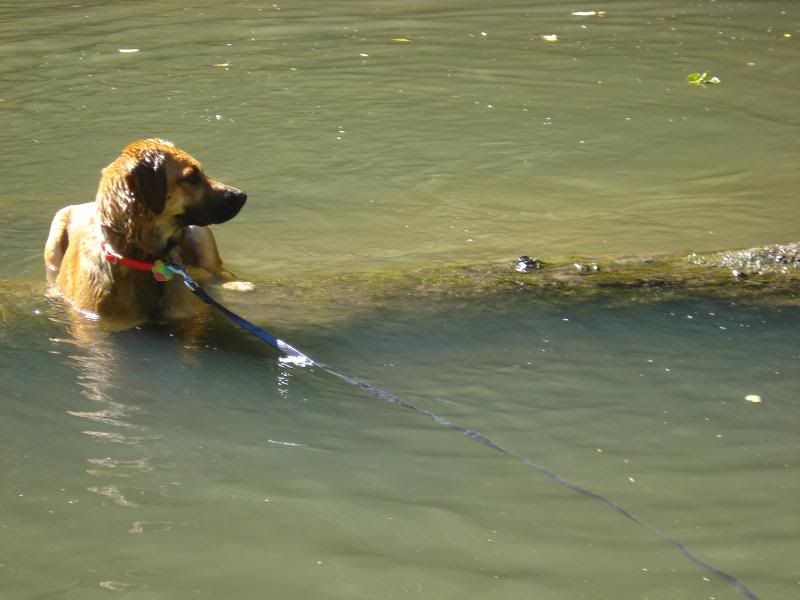
Avery Park for a walk around the loop trail and down to the edge of Mary's River.  Freyja and Moose had a splendid time swimming around. Especially Freyja who thinks she is part river otter.  


In the course of our walk we saw many delightful things. The rose gardens still had plenty of flowers blooming, and the native plant garden--although well past blossoming-- was fantastic and inspiring. As I walked I thought about this blog and what I might say regarding sustainability. The Avery Park composting display seemed promising, and the apparent health of the River did too, but then this appeared...   
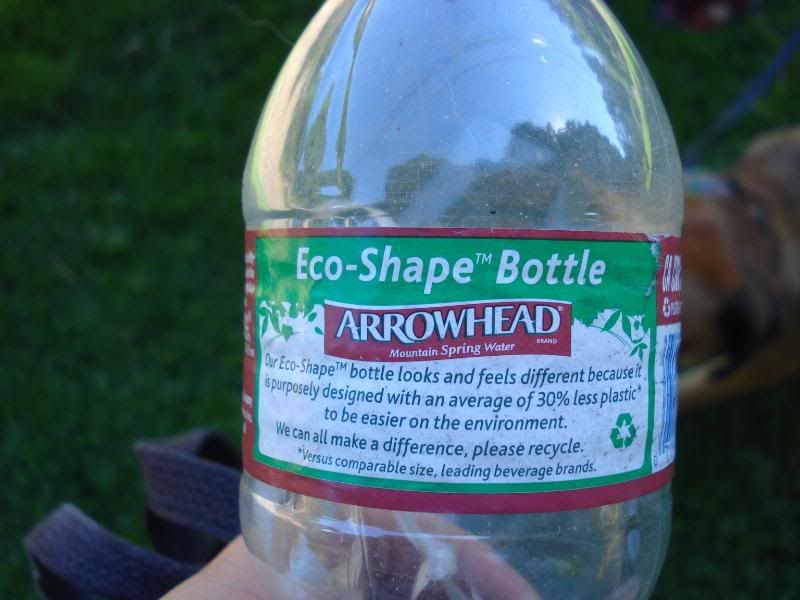
beneath the shrubs between the native plants and the playground. Although by this point in the walk I had already picked up a dozen cigarette butts, a burger king wrapper, a kiddie drink cup, two pull tabs, and a heap of fishing line, I found this particular object worthy of a photograph. In fact upon inspection I found it worthy of two photographs.

This label states that this particular bottle is designed to contain 30% less plastic than the "typical" bottle. While I think this is admirable in someways it is also misleading. Minor efforts like this seem to lull the consumer into thinking that such a purchase is "ecofriendly"-- a positive act. 

Plastics in general are toxic. While they are used medically to save lives as the plastics industry has reminded us in their advertisements, they are not really safe for eating and drinking. They are especially unsafe for children. 

It was only about a year ago when I discovered that many plastics contain toxic chemicals that leech into the foods and beverages stored in them. The main toxin that I have read about are phthalates.  Granted this is only one toxin group but it is enough for me to be very wary. 

Despite the fact that the Phthalate Information Center (a group with panel members from BASF Corporation, Eastman Chemical Company, and ExxonMobile) claim that "Phthalates have established a very strong safety profile over the 50 years in which they have been in general use". I tend to put some stock in the numerous university studies that show a correlation between phtalates and endocrine anomalies, reproductive harm, and carcinogenic effects.

Beyond the toxicity, another issue is the waste of resources involved in the production of plastic bottles. Although plastic is recyclable it can only be recycled so many times before it is no longer usable. Much of what plastic is recycled does not re-enter the consumer market. Most if not all of the plastic bottles consumers purchase are of virgin plastic. Plastic is a petroleum product that is energetically costly to produce. 

Bottled water is especially troubling since it is mostly a "luxury" purchase.


Americans shell out more than $20,000 "every minute of every day" or up to 60 cents for a glass of bottled water


1978 Consumption = 415 Million Gallons**


2006 Consumption = 8.2 Billion Gallons***


For comparison, Worldwide Consumption = 

41 Billion Gallons***


It takes 1,851 gallons of water to refine one barrel of crude oil.**


Twenty-four gallons of water are needed to make one pound of plastic. **


1.5 to 2.7 million tons of plastic used per year to make bottles for bottled water.***


That’s 24gal/pd X 2000 pd/ton x 1.5 million tons = 72 billion gallons of water or 24 times the quantity of water used by the City of Corvallis every year to make bottles that are empty


**Emily Gersema, Associated Press (2003)

***FAO and Earth Policy Institute (2006)


Disturbing. At least to me and to Bird. Although it is seemingly impossible to avoid plastics altogether, it is easy to substantially reduce how much plastic one uses. We've stopped all plastic shopping bag use by bringing our own bags. We've started saving bread bags and produce bags to reuse them. We're slowly but surely converting to bell jars for all of our storage needs, and are in the process of phasing plastic utensils out of our kitchen with the help of our local Goodwill's utensil bin. It's an uphill battle, but a fantastic adventure.


Tons of good links for sustainablity issues and info.

Sunday, August 31, 2008

Sustainability Sunday: Here Comes the Rain Again

For those who may now know it, Rain is the name of the game in many parts of the Pacific Northwest. Newport Oregon for example receives an average annual rainfall of 68 inches. Here in the Willamette Valley however we receive an average of 42 inches per year. This is not drastically different from the annual precipitation back in Blackstone Ma (48 inches). The main difference here is that our average winter temperature in Corvallis is near 40 F compared to Blackstone's 22ish degrees. 


A late summer downpour has inspired me to start seriously thinking about how I intend to confront the coming winter. I want to grow crops all winter since the weather is so nice, but what I will need to do is construct some sort of rain rerouting system to keep the plants from drowning.  I'm open to thoughts and suggestions. 

It's all about water and food these days.  My thoughts seem to continually run back to the basics, the most basic of basics.  Having enough to no longer need to fret about supply (as back in the living in a van days) the real concern now is quality. Most recently I've been thinking about Genetically Engineered or Genetically Modified foods (GE, GM, GMOs). This practice is so disconcerting.

I've been disturbed by GMOs since the late 1990's, but I suppose I never imagined that they would become so prolific and nearly inescapable. Recent reports that even Organic products like veggie dogs and cereals have been contaminated with GMOs are distressing. These companies are trying to avoid GMOs but can't.

"North American production of corn, soybeans and canola is now more than 50% with transgenic traits (herbicide tolerance or bacillus thuringiensis (Bt) resistance), while milk from the United States (US) is mostly produced with recombinant bovine somatatrophin (rBST), and meat is being produced with various biotechnologically-based growth hormones" (Peter W.B. Phillips and Grant Isaac).

Furthermore it seems as though there is little control over inadvertent hybridization between GMO and non-GMO crops. 

Solution? I don't have one. For me the ideal solution is radical. Stop GMO production altogether and/or mandatory labeling on all products containing GMOs (this of course doesn't even take into account all of the international implications of GMO agribusiness).

Barring this I feel as though organic and local is the best bet. All Local eating is a major challenge but one that I may undertake soon if only for my own piece of mind.


GMO Labeling: Threat Or Opportunity?
Peter W.B. Phillips and Grant Isaac
University of Saskatchewan, Canada
AgBioForum

Sunday, August 17, 2008

Sunday with Soil, Sustainability, and Cinema

We went to the garden center today and picked up some more seeds and soil. There was a lot to be done in the garden this weekend. First order of business involved stabbing a number of holes into the bottom of a forlorn and lidless rubbermaid tub thus transforming it into a cuke-topia! There are two fair sized cucumber plants comfortably situated in there now. I also re potted another bean plant, harvested a crop of baby carrots, re-tied the tomatoes and trimmed the fuscias, tomatoes, and strawberries (which have amazingly started flowering again).  By the end of the day there will be some newly planted peas and lettuce.


Since it is Sunday I thought I'd put my dos centavos in about sustainability. On my mind at the moment is soap. We really love the new citrus Dr. Bronners. We use it for hands, dishes, and laundry. We've even cleaned the toilet with it. We get the liquid in bulk which saves on money and plastic. We also have a few Ecocloths that we recently picked up. This link is for a similar product since at the moment my memory on the exact brand we own escapes me. Oh, another thing about cleanliness and sustainability is the issue of chemical hazards in soaps, shampoos and beauty products. The website called Skin Deep will tell the consumer what products contain potentially harmful chemicals.  (cha-ching...maybe more next Sunday)

Tonight we're watching the film version of The Age of Innocence. I'm hoping it will be as well done as Ethan Frome.

Sunday, August 10, 2008

A Sustaining Conversation #1 (maybe a new Sunday Tradition)

Chickadees and Nuthatches have returned to our feeders. The squirrels, who ravaged and destroyed several feeders in spring, have pleasingly gone elsewhere. I find myself excited for autumn although the season here is not much like autumn back home.

The tomatoes have many many little green tomats and I've had to be dilligent about pruning and re-tying the one we've staked. Lesson learned: although stakes cost 50 cents and cages cost 2.50 the cage is much less time intensive, possibly worth it. The baby bean and cuke plants are getting bigger, and the peas that I planted in April are still occassionally issuing a pea or two. The carrots don't seem to be maturing, so perhaps the lesson here is that unlike radishes, carrots don't do that well in a container. Mini-gladiolus have yet to flower, the fuscias are pretty much done flowering, and the herbs are doing well, though they certainly would benefit from being placed in larger pots.

Recently Bird and I have found ourselves answering a number of questions about ecology and sustainability. This is logical I suppose considering that she has a degree in Natural Resources, and I am also a lover of living things. As I think about the questions we've answered and the advice we've given I realize that it might be worth while to share some of that here. We're not saying we're the greatest, we've got many things we'd like to do better, but here are some of the little things we're up to in order to reduce our ecological impact.

House: Since we aren't homeowners we had alot of room to choose with regard to our dwelling. Originally we moved into a large freestanding house >1500 sq feet. In Albany, about 10 miles from Corvallis. After testing out our ecofoot print one day (lots of online quizes to do this) we realized how wretched this choice was for our sustainability goals. We quickly decided to move to a much smaller apx. 500 sq. feet rowhouse just >2 miles from campus. 

Electricity: Aside from the obvious (turning off lights/appliances, unplugging things not in use, using compact fluorescent light bulbs) we also purchased our power through Blue Sky which is all alternative source energy (mostly wind). It is slightly more expensive, but not much (for us an extra 2.00 or so). Options like this are avalable in many places ( in New England,  in Midwest,  and South).

Recycling and Composting: We have worked hard to reduce the amount of trash we make. On average the house of three adults and two dogs produces an average of 2.5 gallons of trash per week. While we think we can do better and are working to improve we do dispose of our trash in Bio-Bags, so at the very least this will help to promote the faster breakdown of our garbage. The rest of our stuff we either compost or recycle. The big thing about recycling that we're trying to promote (especially Bird because she worked for a recycling place) is that you must, must, must Only Recycle Things That Are Actually Recyclable. Putting non recyclable stuff in the recycling contaminates the bins and can cause recyclable materials to be turned to waste.

Food: Here's another area where the choices for reducing impact are many. Here in Casa Colibri we are nearly vegan, a food choice that substantially reduces eco-impact. I say nearly vegan because we have recently become much more concerned with local food as a sustainability practice. When it comes to local food we're so lucky because we live in the fertile and hippy filled Willamette Valley. Here there are tons of organic growers nearby. We buy organic whenever possible. There are certainly some foods that we will only eat organic. Organic is sometimes expensive, but buying locally and in season helps us to remediate these costs. We also dry and freeze items we buy in bulk while they are cheap. Hoping to learn how to can soon for more preservation options.  Another helpful thing involving food is the abundance of bulk suppliers we have down here in Oregon. We buy everything from sugar and maple syrup to canola oil  and soap in bulk. We use and reuse our own containers cutting down on waste and saving money.

 Our Current Sustainability Goals: Stopping our junk mail (we get so much and it is lame!), increasing our gardening capacity, stopping all plastic use and purchase, no new shopping bags, increasing local food purchase, reducing waste to 3 gallons every 2-3 weeks, stopping cellphone use.

Long Term Goals: an extremely fuel efficient vehicle, a green building as our dwelling, all organic, 0 waste, off grid technology (solar, greywater)